The Best DAW Options on Linux in 2025: A Complete Guide

For years, Linux had a reputation for being difficult to use in audio production, but that era is long behind us. With huge advancements across the pro-audio ecosystem—PipeWire’s flexible routing, continued JACK support, improved Wine-ASIO bridges, Flatpak packaging, and steady community-driven development—Linux has evolved into a powerful and reliable platform for musicians, producers, and sound designers. Today, it stands as a genuinely capable alternative to traditional operating systems for serious creative work.
Whether you're chasing an entirely open-source workflow or looking to bring commercial tools into a Linux setup, there’s now a DAW for nearly every type of creator. Below is a comprehensive look at the most popular and production-ready DAWs available on Linux today.
1. Ardour
If you're searching for the most complete native Linux DAW, Ardour is the crown jewel. It’s a fully featured recording, mixing, and editing workstation developed by a community of engineers and musicians with decades of experience.
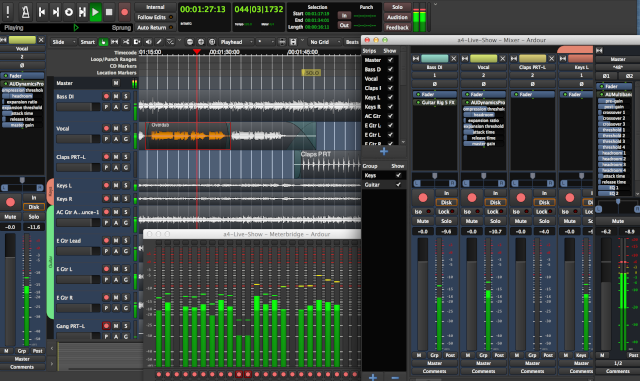
Why Ardour stands out
- Professional-grade audio and MIDI editing
- Non-destructive editing with unlimited undo
- Powerful automation, buses, routing, and grouping
- JACK and ALSA support, now with improved PipeWire integration
- Extensive plugin support (LV2, some VST3, LADSPA)
- Open-source and actively developed
Ardour is often compared to Pro Tools and Logic Pro in terms of workflow, and for many users, it’s more than enough for advanced music production and sound design.
2. Reaper
Reaper is technically a Windows/macOS DAW, but its Linux native build has become stable and popular. It runs lightweight, is famously customizable, and supports nearly every plugin format via native or Wine bridges.
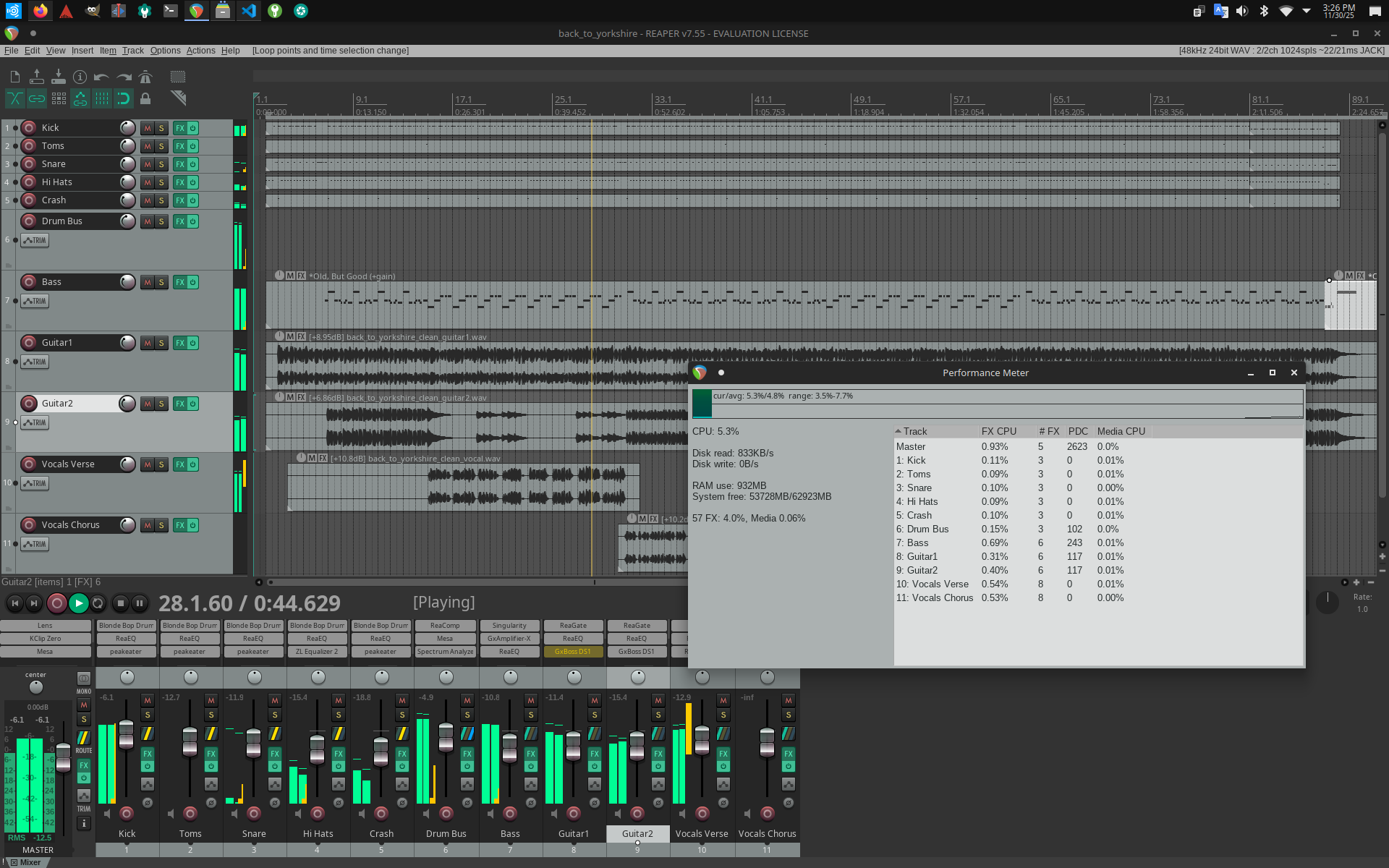
Highlights
- Incredibly fast performance
- Powerful routing and scripting (ReaScripts, JSFX)
- Supports VST2 and VST3 natively
- Wine compatibility allows Windows VSTs
- Very small footprint (~15MB installer)
- Long free trial and low-cost license
For power users who love tweaking and automating workflows, Reaper might be the best DAW on Linux, bar none.
3. Bitwig Studio
Linux users in electronic music have celebrated Bitwig Studio as one of the most advanced commercial DAWs to support Linux natively.
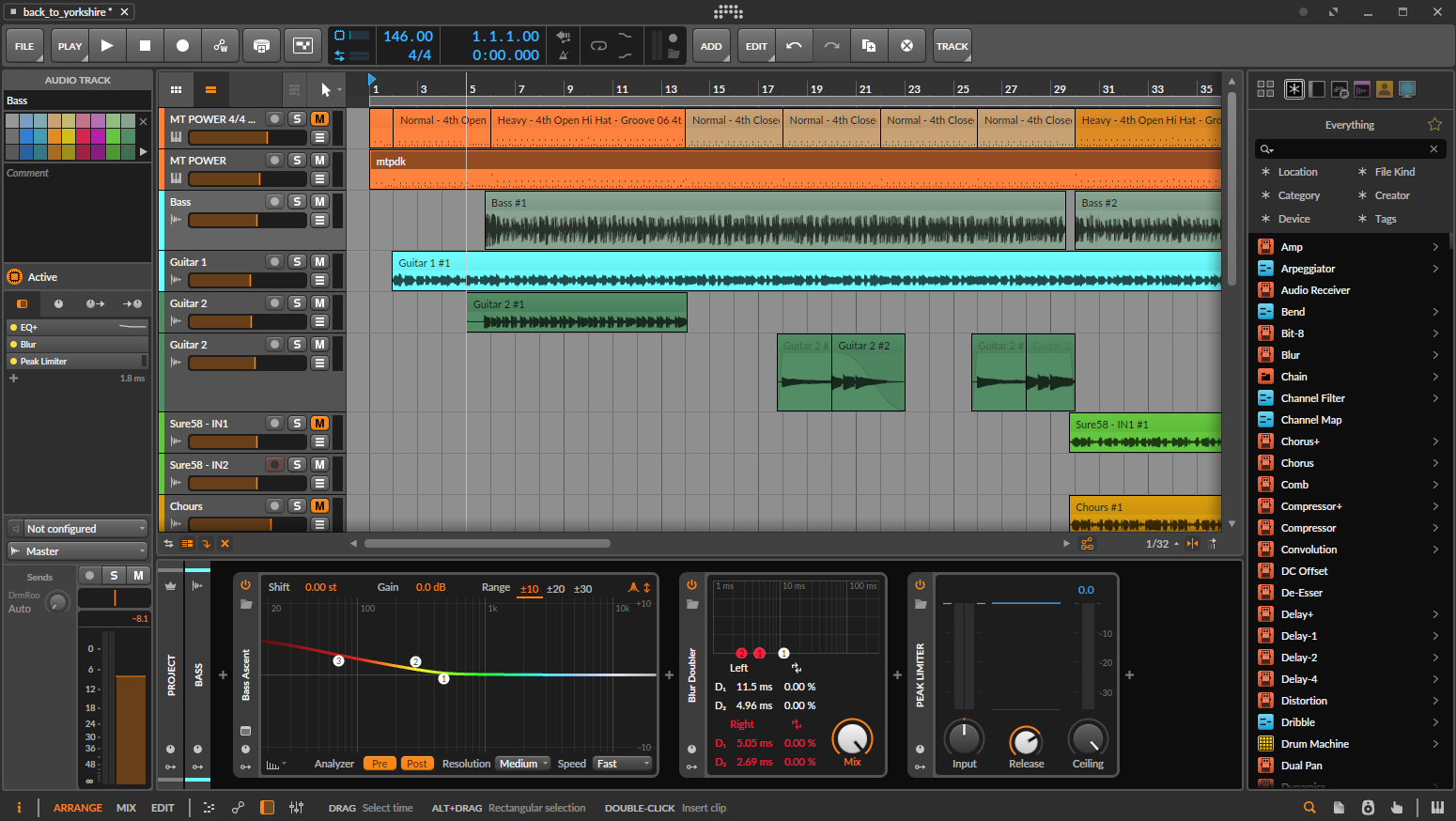
Why electronic producers love Bitwig
- Industry-leading modulation system
- Built-in synths, samplers, and sound design tools
- Clip launcher similar to Ableton Live
- VST3 support
- Highly responsive UI built for experimental workflows
- Regular updates with cutting-edge creative features
If you create techno, ambient, EDM, or experimental music, Bitwig on Linux is a powerhouse.
https://www.bitwig.com/
4. LMMS
LMMS (Linux MultiMedia Studio) is a completely open-source DAW aimed at beat-making and composition. It’s not a full recording DAW like Ardour or Reaper, but it excels in MIDI sequencing and electronic production.
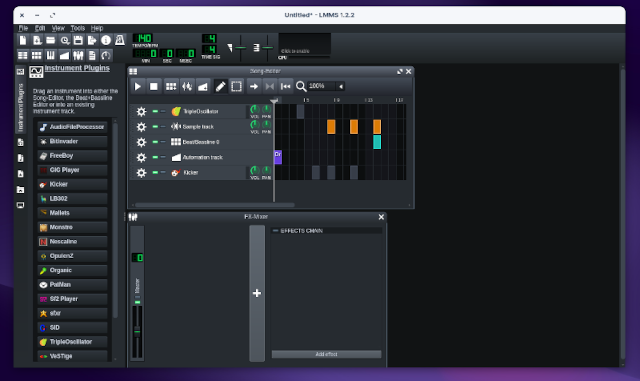
Strengths
- Easy to learn with a simple interface
- Pattern-based workflow similar to FL Studio
- Built-in instruments and effects
- Ideal for students or hobby musicians
- 100% free
LMMS is great as a low-barrier entry point into music production.
5. Rosegarden
Rosegarden is unique among Linux DAWs because it’s built around MIDI notation and composition rather than multi-track audio recording.
Who it’s for
- Classical composers
- Film scorers
- Musicians who prefer notation-driven workflows
- MIDI-heavy producers
It integrates nicely with JACK and other Linux audio tools, though it’s not meant to replace a fully-fledged modern DAW.
https://www.rosegardenmusic.com/
6. Qtractor
Qtractor is a lightweight DAW designed for musicians who want a straightforward environment for recording and editing.
Best features
- Simple learning curve
- LV2/LADSPA plugin support
- Great JACK integration
- Solid for small to mid-size projects
It's not as feature-rich as Ardour or Reaper, but for many recording tasks, it’s more than enough.
7. Tracktion Waveform
Waveform (formerly Tracktion) offers a polished commercial DAW with a unique single-screen workflow. The Linux version is fully supported, albeit debian based distributions only.
Why Linux creators choose Waveform
- Excellent UI for beginners
- Good built-in synths and effects
- Modern plugin support (VST3)
- Strong MIDI tools
It strikes a great balance between modern features and ease of use.
Plugin Compatibility on Linux
Most DAWs support:
- LV2 (Linux-native standard)
- LADSPA
- VST2 and VST3 (increasingly well supported)
With Wine + yabridge, many producers run Windows VSTs successfully—though results depend on the plugin.
The State of Linux Audio in 2025
Linux audio is the strongest it has ever been:
- PipeWire has nearly replaced JACK/ALSA confusion for many users.
- Commercial DAW support (Bitwig, Waveform, Reaper) continues to grow.
- Open-source tools remain powerful and community-driven.
- Professional users in electronic music and sound design are increasingly adopting Linux setups.
Final Thoughts
Linux is no longer a niche option for audio production — it’s a legitimate, flexible, and powerful platform. Whether you want a completely open-source workflow (Ardour, Qtractor, LMMS), a hybrid environment (Reaper), or a top-tier commercial experience (Bitwig, Waveform), there’s a DAW tailored to your needs.